The Bill Comes Due: AI's Infrastructure Reckoning
For two years the AI story was about capability. This week it was about the invoice. Record chip earnings, hundred-billion-dollar buildouts, and tens of thousands of layoffs all landed together, and they tell one story about who pays for the future we keep being promised.
My last few editions tracked who gets to use AI, and then the flood of models that arrived once the gates opened. This week the camera pulled back to show the thing underneath all of it: the money and the machines. And once you see the scale of what's being spent, and how it's being paid for, the human question sharpens fast.
This week, in numbers
Rather than a list, here are the week's biggest signals as a moving picture. They're all pointing the same direction.
The machines: an arms race with a price tag
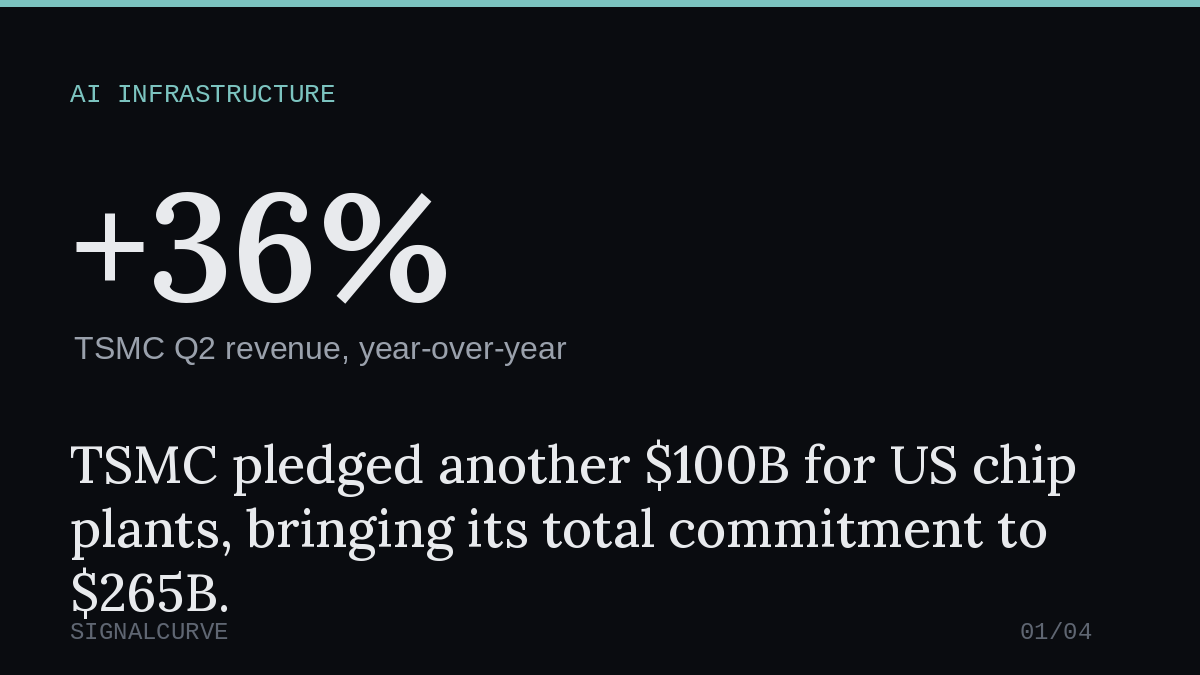
Taiwan Semiconductor, the company that manufactures nearly every advanced AI chip on earth, reported June-quarter revenue up around 36% year over year, roughly $39.6 billion in a single quarter. On the same stretch it committed another $100 billion to build more chip plants in Arizona, lifting its total US pledge to about $265 billion. When one company's factory output is treated by Wall Street as a thermometer for the entire economy, that tells you how much of the current boom rests on a very small number of buildings.
Underneath that sits Stargate, the roughly $500 billion data-center effort meant to house the compute for the next generation of models. It is the kind of number that used to describe national budgets, not corporate infrastructure projects.
The bill: who is actually paying
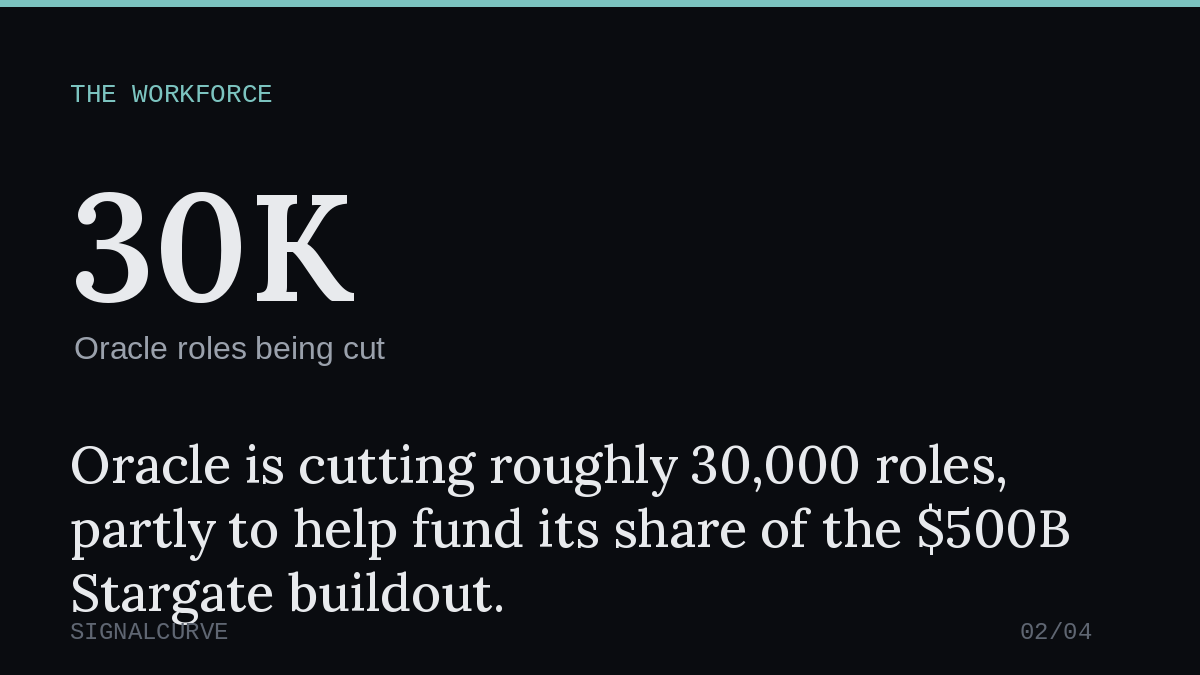
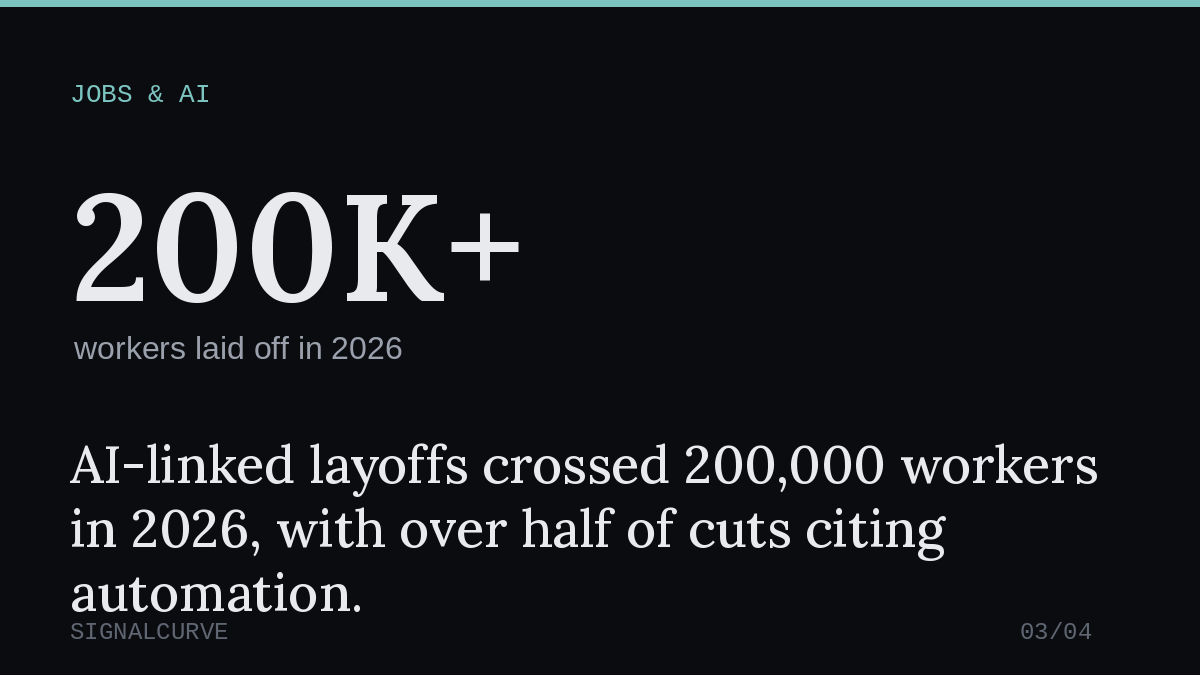
Here is where the human-first lens earns its place. Some of that infrastructure is being financed, in part, by cutting people. Oracle moved to cut roughly 30,000 roles, reported partly as a way to free up capital for its share of the buildout. Across the industry, AI-cited layoffs passed 200,000 workers for 2026, with more than half of tracked cuts naming automation or AI as a driver.
It is worth being precise, because the honest picture is murkier than either the hype or the panic. Economists are split on how much of this is AI actually replacing work versus companies using AI as cover for ordinary cost-cutting, or simply slowing their hiring. Some of the displacement is real and measurable. Some of it is a story executives tell to justify decisions they wanted to make anyway. Both things are happening at once, and the workers on the receiving end feel the same regardless of which label their layoff gets.
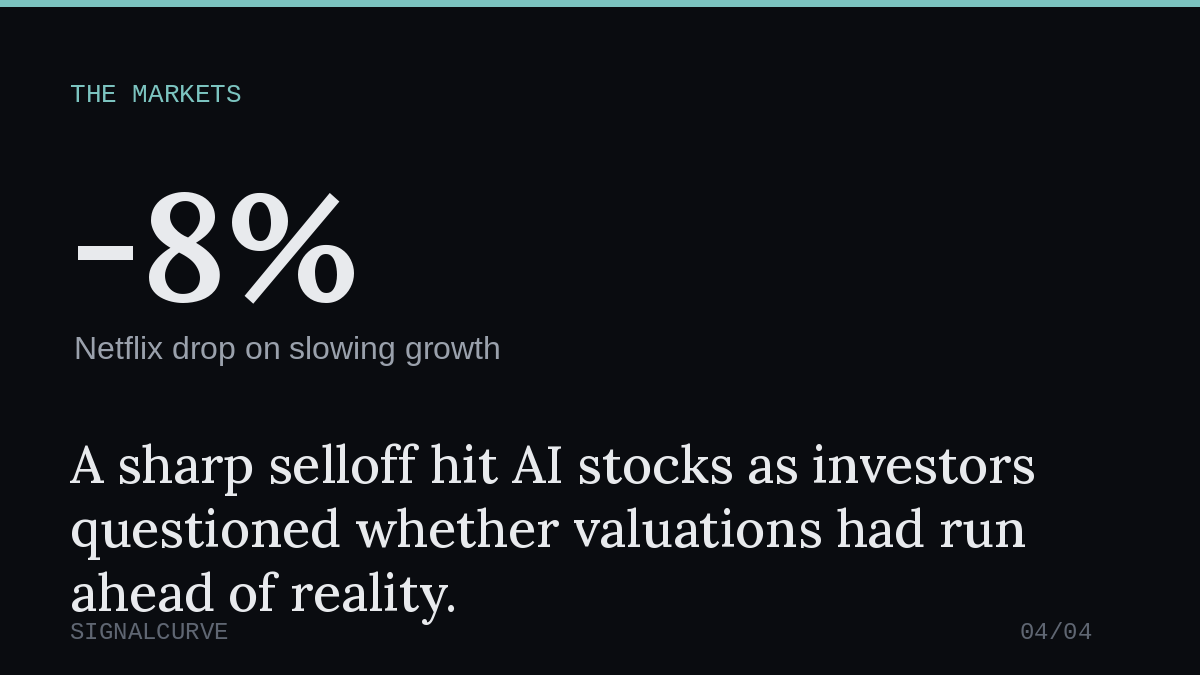
Then, mid-week, the markets flinched. A sharp selloff hit AI-exposed stocks as investors started asking out loud whether the valuations had outrun the reality. When the money that funds the buildout gets nervous, the pressure to show returns, often by cutting further, only grows.
The signal
The pattern I keep coming back to is this. We are pouring hundreds of billions into building the capacity for AI, and part of that capacity is being paid for by the very workers the technology is supposed to lift. That is not a reason to be against the buildout. Infrastructure matters, and the productivity gains may well be real. But the sequencing deserves scrutiny: the concrete and the silicon are being funded now, on the promise that the broadly shared benefits will arrive later.
The thing worth watching is whether "later" ever comes for the people being cut today, or whether the gains concentrate at the top of the same short list we talked about two weeks ago. The money is moving faster than the models. It is worth asking where it is actually going, and who it is leaving behind.
Same time next week.
Sources
- Bloomberg — TSMC Q2 2026 revenue up 36% year-over-year (July 13, 2026).
- InformationWeek, "The Week of July 13–17" — TSMC's additional $100B US investment, $265B total.
- AIToolsRecap / Tech Startups — Oracle cutting up to 30,000 roles to help fund the $500B Stargate partnership.
- SkillSyncer 2026 Layoffs Tracker — AI-cited layoffs surpassing 200,000 workers in 2026 (as of July 16, 2026).
- Sophic Capital, "July 18, 2026: Tech Sells Off As AI Trade Weakens" — market selloff and Netflix's post-earnings drop.
- Insurance Journal / Barclays and Yale Budget Lab commentary — economists divided on AI's true labor-market impact (July 2, 2026).